10.23°C Vancouver 10.23°C Vancouver

Nov 25, 2020 3:48 AM -
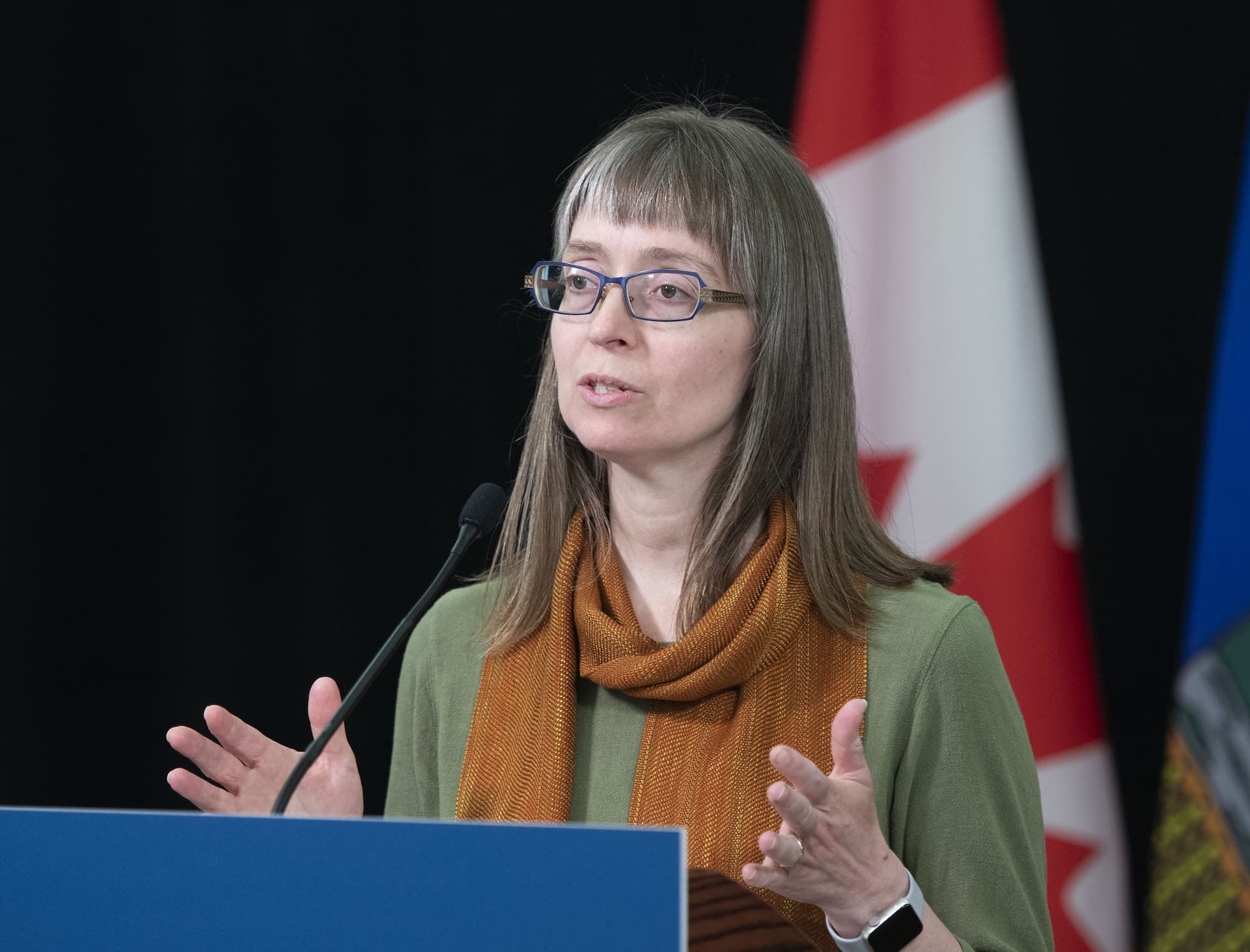
Alberta is bringing in tougher COVID-19 restrictions that include limits on social gatherings and less face-to-face class time for students.
Premier Jason Kenney says there are to be no indoor gatherings, but people who live alone can have up to two personal contacts.
He says students in Grades 7 through 12 will transition next week to at-home learning and the school holiday break will be extended from December 18th to January 11th.
Banquet halls, conference centres and concert venues must also close.
Older students will be sent home from school at the end of the month, indoor social gatherings are banned and businesses will facerestrictions after COVID-19 cases have surged in Alberta.
On Tuesday afternoon, Premier Jason Kenney introduced ``bold andtargeted new measures to protect lives and livelihoods,'' which bans indoor social gatherings, ends in-person learning at the end of the month for kids in Grades 7 to 12 and places limits on some businesses.
Kenney declared a state of public emergency. On Nov. 30 all students from Grades 7 to 12 will be learning online from home for the rest of 2021.
They'll return to in-person classes Jan. 11, after the winter break.
Diploma exams are optional for rest of the school year, students and families can choose to write an exam or receive an exemption for the April, June and August 2021 exams.
Younger students and early childhood services will stay in schools until Dec. 18. Between Dec. 18 and Jan. 11, aside from the time they spend on their winter break, they will do at-home learning.
``These steps are not being taken lightly,'' Kenney said.
``These are the minimum restrictions needed now to minimize the damage to the healthcare system.''
Indoor social gatherings are now banned across Alberta, a rule that will stay in place until further notice. Outdoor social gatherings are limited to 10 people.
Funerals and weddings will be restricted to 10 people with no receptions.
``Social gatherings are the biggest problem,'' Kenney said.
``(Social gatherings are) the key reason why COVID-19 is winning.''
All places of worship across the province will need to cap theirattendance to one-third of their fire code capacity with everyone inside wearing a mask, sitting with their cohort and social distancing.
Kenney said while almost all places of worship are following thecurrent rules around COVID-19, a select few have been not complying, resulting in outbreaks.
The premier said most have worked hard to limit the spread and recognizes these institutions are vital part of peoples emotion, mental and spiritual health.
These new rules will be in place for three weeks.
Many businesses will now be either closed for in-person shopping, open with restricted capacity or open by appointment only.
Banquet halls, conference centres, trade shows, concert venues,non-approved/licenced markets and community centres are closed.
Children's play places, indoor playgrounds and all levels of sport(professional, semi-professional, junior, collegiate/universities and amateur) are also banned from in-person activities.
Sports leagues may apply for exemptions.
Most retail businesses may remain open with capacity limited to 25 per cent of the occupancy set under the Alberta Fire Code, including retail stores, grocery stores, pharmacies, clothing stores, computer and technology stores, hardware, automotive, farmers markets and outdoor seasonal markets.
Some entertainment services fall under the 25 per cent threshold as well, like movie theatres, museums, libraries, casinos, indoor entertainment centres, indoor fitness, recreation sports and physical activity centres, including dance and yoga studios, martial arts, gymnastics and private or public swimming pools.
Bars and restaurants can continue in-person dining but must comply with guidelines and those seated at tables together must be part of same household.
Masks are now mandatory inside all workplaces Edmonton, Calgary and their surrounding areas. The premier said much of the COVID-19 spread is happening inside workplaces.
A full list of public health measures can be found on Alberta's website.
On Tuesday, Alberta reported an additional 1,115 cases of COVID-19.
That's lower than the past few days, but Alberta Chief Medical Officer of Health Dr. Deena Hinshaw said that was because there were fewer tests, some 13,500, with a provincial positivity rate of 8.3 per cent.
Sixteen deaths were announced on Tuesday from COVID-19, and over the past two weeks 103 people died from the virus.
There are currently 348 hospitalizations with 66 people in ICU.
The province has lost 492 residents in total to COVID-19.
The average age of death is 82 years.
There are currently 13,349 active cases in the province, the most in the country, with the bulk of them being in the Edmonton (6,128 cases) zone.