16.52°C Vancouver

Apr 19, 2024 2:40 PM - The Canadian Press
Ottawa to force banks to call carbon rebate a carbon rebate in direct deposits

Share On
ottawa-to-force-banks-to-call-carbon-rebate-a-carbon-rebate-in-direct-deposits
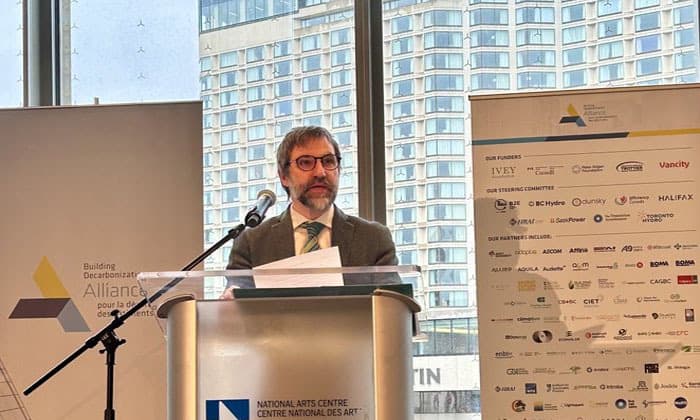
The government has struggled to fully explain the carbon price and the rebates since the policy began in 2019.(Photo: Twiter/Steven Guilbeault)

Canadian banks that refuse to identify the carbon rebate by name when doing direct deposits are forcing the government to change the law to make them do it, says Environment Minister Steven Guilbeault.

Guilbeault is taking the stand after Tuesday's federal budget promised to amend the Financial Administration Act so government payments accepted for deposit at Canadian banks will carry whatever title the government wants.

"The fact that they haven't been doing it now for many years led us to take this position," Guilbeault said.

His department has been battling with banks for almost two years over how carbon rebates are labelled when they are deposited directly into bank accounts.

The first rebate deposits in 2022 were labelled very generically "federal payment" and "EFT Canada," for example which meant recipients had no idea why they were getting the money.

Some banks, but not all, have since amended their procedures to ensure bank statements reflect the measure's new name: the "Canada Carbon Rebate."

TD and BMO have adopted the government's requested "CdaCarbonRebate" entry, which fits the 15-character limit imposed by some banks.

However, RBC and Scotiabank were unable to make the change in time for the rollout, although both say they intend to update to the new name.

CIBC, meanwhile, is still calling it "Deposit Canada."

Guilbeault said the lack of a clear identifier isn't the only thing fuelling confusion about carbon pricing, but is definitely part of the problem.

"I think we took it for granted that since people were receiving it, people knew they were receiving it," Guilbeault said.

"We've come to discover over the last few months that it wasn't the case, in part because it the way it was labelled or mislabelled, I should say by most financial institutions."

The government has struggled to fully explain the carbon price and the rebates since the policy began in 2019.

That has helped the Conservatives, fastidiously opposed to carbon pricing, in their unrelenting efforts to kill it off once and for all.

Changing the law wouldn't just affect carbon rebates, but all government deposits, including child benefits, employment insurance and tax refunds.

Guilbeault rejected any suggestion the change would cost the banks money.

"You can quote me on this: I have a really hard time believing the banks when they say that it's going to cost them money," he said.

"I feel that, as a client, we should have the right to label this the way we feel it should be labelled and it's not up to the banks to decide."

A spokeswoman for the Canadian Bankers Association had little to say about the proposed change.

"Banks in Canada support measures that help build a strong and sustainable Canadian economy," Maggie Cheung said in a written statement.

"We will also review proposed amendments to the Financial Administration Act when they are presented, and what proposed changes to the Act would mean for banks and Canadians."

Latest news

AlbertaSep 22, 2026

Alberta Government Suspends Fuel Tax Until Year-End

The Alberta government is suspending the province’s fuel tax for the rest of the year. Premier Danielle Smith made the announcement Tuesday while addressing business leaders in Calgary. Smith said the average price of Western Texas Intermediate (WTI) crude was $90.54 per barrel last month, triggering a full suspension of the 13-cent-per-litre provincial fuel tax for the quarter beginning October 1. The province had previously suspended its fuel relief program during the last quarter. However, Smith said Albertans had told the government they would prefer to receive the savings directly at th
b-c-premier-david-eby-calls-early-provincial-election
BCSep 22, 2026

B.C. Premier David Eby Calls Early Provincial Election

B.C. Premier David Eby has formally called a provincial election after meeting with Lieutenant Governor Wendy Cocchia and requesting the dissolution of the legislature. The election is being held two years ahead of schedule. The next provincial election had originally been set for October 21, 2028. The announcement also cancels the Abbotsford-Mission byelection scheduled for September 26, as the riding will now be contested as part of the provincewide general election. The seat had been vacated by B.C. Conservative MLA Rian Gaspar to allow former party leader Kerry-Lynne Findlay to run in the
BCSep 22, 2026

B.C. MLA Brent Chapman Leaves Conservatives, Joins OneBC Party

Party-switching intensifies in B.C. as Surrey South MLA Brent Chapman leaves the B.C. Conservatives and joins the OneBC Party. Chapman, who is the husband of former B.C. Conservative leader Kerry-Lynne Findlay, had been facing continued pressure within the party over controversial social media comments from his past. In a statement, Chapman said he had been a loyal party member for the past 15 years, but recent internal divisions, publicly exposed disagreements and what he described as a decline in the party’s principles had made it difficult for him to remain with the B.C. Conservatives. On
b-c-premier-david-eby-meets-lieutenant-governor-wendy-cocchia
BCSep 22, 2026

B.C. Premier David Eby Meets Lieutenant Governor Wendy Cocchia

B.C. Premier David Eby has met with Lieutenant Governor Wendy Cocchia. Eby is scheduled to hold a press conference at 12:15 p.m. at Government House in Victoria, where he is expected to formally announce a provincial election. The election is being called with about two years remaining in the current term of the B.C. NDP government. Eby had indicated that he was considering an early election amid recent turmoil within the opposition Conservative Party, a change in leadership and the NDP government's narrow one-seat majority in the legislature. According to Elections B.C.'s anticipated electio
CanadaSep 22, 2026

Canada’s NDP Opposes Federal Plan to Allow Private Investment in Major Airports

Canada’s federal NDP is opposing the federal government’s plan to allow private investment in the country’s airports. NDP Leader Avi Lewis has described the Carney government’s proposal as privatization, arguing that calling it anything else is misleading to the public. Speaking outside the House of Commons alongside party members and labour union leaders, Lewis warned that handing over the operations of Canada’s four largest airports in Toronto, Montreal, Calgary and Vancouver to private investors could lead to higher passenger fees. Lewis said the plan amounts to privatization beca

Related News