14.42°C Vancouver

Mar 19, 2024 3:23 PM - The Associated Press
Hong Kong lawmakers pass new national security law, giving government more power to curb dissent

Share On
hong-kong-lawmakers-pass-new-national-security-law-giving-government-more-power-to-curb-dissent
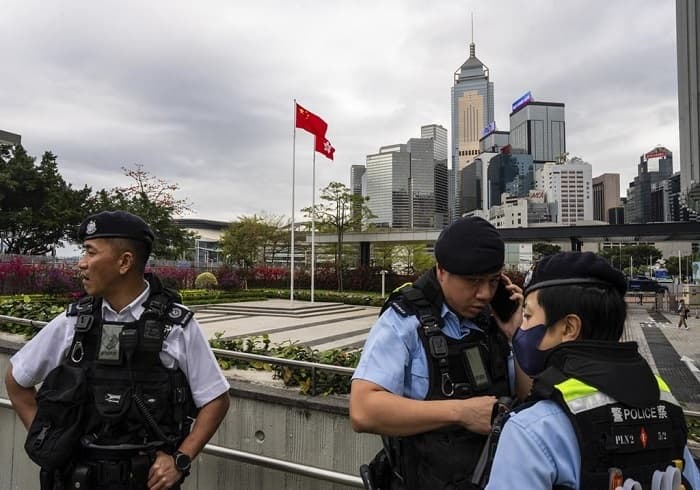
The legislature passed the Safeguarding National Security Law during a special session Tuesday.(Photo: The Canadian Press)

Hong Kong lawmakers passed anew national security lawon Tuesday that grants the government more power to quash dissent, widely seen as the latest step in a sweeping political crackdown that was triggered by pro-democracy protests in 2019.

The legislature passed the Safeguarding National Security Law during a special session Tuesday. It comes on top of a similar law imposed by Beijing four years ago, which has already largely silenced opposition voices in the financial hub.

Hong Kong’s Legislative Council, which is packed with Beijing loyalistsfollowing an electoral overhaul, expedited the process. Sincethe bill was unveiledon March 8, a committee held daily meetings for a week, following an appeal by Hong Kong leader John Lee to push the law through “at full speed.”

The law threatens stringent penalties for a wide range of actions authorities call threats to national security, with the most severe including treason and insurrection punishable by life imprisonment. Lesser offenses, including the possession of seditious publications, could also lead to several years in jail. Some provisions allow criminal prosecutions for acts committed anywhere in the world.

Legislative Council President Andrew Leung said he believed all lawmakers were honored to have taken part in this “historic mission.”

“I fully agree with what the Chief Executive said: the sooner the legislation is completed, the sooner national security will be safeguarded,” he said.

Critics worry the new law will further erode civil liberties that Beijing promised to preserve for 50 years when the former British colony returned to Chinese rule in 1997.

Hong Kong’s political scene has changed dramatically since the massive 2019 street protests that challenged China’s rule over the semi-autonomous territory, and the imposition of Beijing’s National Security Law.

Many leading activists have been prosecuted, while others sought refuge abroad. Influential pro-democracy media such as Apple Daily and Stand News were shuttered. The crackdown prompted an exodus of disillusioned young professionals and middle-class families to the U.S., Britain, Canada, and Taiwan.

Hong Kong’s mini-constitution, the Basic Law, requires the city to enact a home-grown national security law. A previous attempt in 2003 sparked a massive street protest that drew half a million people, and forced the legislation to be shelved. Such protests against the current bill were absent largely due to the chilling effect of the existing security law.

Both Chinese and Hong Kong governments say the Beijing-imposed law restored stability after the 2019 protests.

Officials insist the new security law balances security with safeguarding rights and freedoms. The city government said it’s needed to prevent a recurrence of the protests, and that it will only affect “an extremely small minority” of disloyal residents.

The measure targets espionage, disclosing state secrets, and “colluding with external forces” to commit illegal acts, among others. Its provisions include tougher penalties for people convicted of endangering national security by certain acts if they’re also found to be working with foreign governments or organizations to do so.

Those who damage public infrastructure with the intent to endanger national security could be jailed for 20 years, or, if they colluded with external forces, for life. In 2019, protesters occupied Hong Kong’s airport and vandalized railway stations.

Businesspeople and journalists have expressedfearsthat a broad law against disclosure of state secrets and foreign interference will affect their day-to-day work.

Observers are closely watching to see if the authorities will extend enforcement to other professional sectors and its implications on liberties for Hong Kongers.
Latest news

poilievre-says-conservatives-would-campaign-against-alberta-separation-referendum
CanadaMay 21, 2026

Poilievre says Conservatives would campaign against Alberta separation referendum

Conservative Leader Pierre Poilievre says he and all Conservative MPs would campaign to keep Alberta in Canada if a referendum on separation is held in the province. Poilievre said the party would take the same position in Quebec if a Parti Québécois government were elected and moved ahead with a sovereignty referendum there. The comments come as Alberta Premier Danielle Smith is expected to deliver a televised address later today. Her United Conservative government is considering whether to include a question related to Alberta’s future within Canada in a series of referendums planned for
alberta-premier-to-deliver-televised-address-amid-renewed-separation-referendum-debate
AlbertaMay 21, 2026

Alberta premier to deliver televised address amid renewed separation referendum debate

Alberta Premier Danielle Smith is scheduled to deliver a televised address Thursday evening amid renewed political debate over a possible referendum on Alberta’s future within Confederation. The address is set to air at 6:45 p.m. on CTV, Global and Rogers television networks and will also be livestreamed on the premier’s social media channels. The appearance follows controversy at a United Conservative Party caucus committee meeting Wednesday, where members debated a motion urging Smith to call an Oct. 19 referendum on Alberta’s place in Canada. The motion, introduced by UCP member Nate
alberta-premier-danielle-smith-announces-cabinet-shuffle-amid-referendum-process
AlbertaMay 21, 2026

Alberta Premier Danielle Smith announces cabinet shuffle amid referendum process

Alberta Premier Danielle Smith announced a cabinet shuffle Thursday, with several senior ministers receiving new portfolios as the provincial government continues work related to a proposed referendum process in the province. Lieutenant Governor Salma Lakhani administered the oath of office to the newly appointed ministers during a ceremony in Edmonton. Jason Nixon was appointed Alberta’s new finance minister, while Adriana LaGrange returned to the hospitals and surgical health services portfolio. Tara Sawyer was named minister of agriculture and irrigation. Nathan Neudorf was appointed mini
carney-eby-discuss-fast-tracking-major-projects-during-vancouver-meeting
CanadaMay 21, 2026

Carney, Eby discuss fast-tracking major projects during Vancouver meeting

Prime Minister Mark Carney and British Columbia Premier David Eby held a closed-door meeting in Vancouver on Wednesday, where both leaders discussed a new co-operation agreement aimed at accelerating development projects across the province. Following the meeting, Carney said closer collaboration between federal and provincial governments would help strengthen Canada’s economy and move major projects forward more quickly. He said governments can achieve more when they work together and added that economic growth remains a priority. Earlier in the day, the prime minister addressed a business
unions-raise-concerns-over-possible-changes-to-federal-labour-laws-in-canada
CanadaMay 21, 2026

Unions raise concerns over possible changes to federal labour laws in Canada

Several Canadian unions are raising concerns over potential changes to federal labour laws being considered by Prime Minister Mark Carney’s government, warning the move could limit workers’ right to strike. According to reports, the federal government circulated a discussion paper on April 17 seeking feedback from selected stakeholders, including representatives from the airline, port, railway, telecommunications and banking sectors. Union groups say they are concerned the government could expand the number of workplaces classified as “essential services,” a designation that can restri

Related News