8.63°C Vancouver 8.63°C Vancouver
Dec 6, 2024 3:45 PM - The Canadian Press
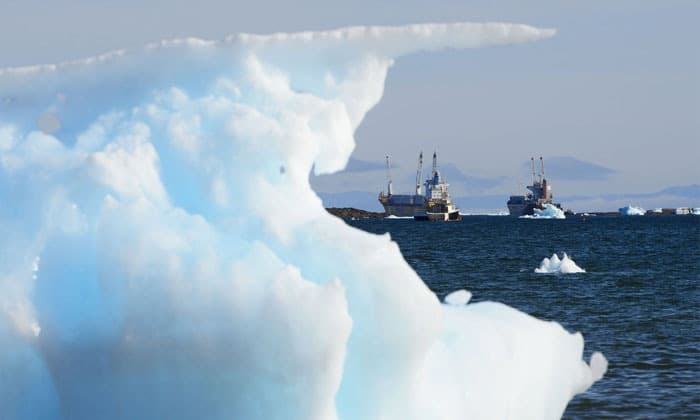
Canada has unveiled an Arctic foreign policy that commits to increasing domestic and international collaboration to combat emerging foreign threats in the North.
The policy, released by Global Affairs Canada on Friday in Ottawa, says the North American Arctic is "no longer free from tension" amid increased geopolitical instability following Russia's invasion of Ukraine, which has "shaken the foundations of international co-operation in the Arctic."
A key part of the plan is to revive the role of Canada's Arctic ambassador, which was removed in 2006 under the Harper government, and commits to opening consulates in Nuuk, Greenland, and Anchorage, Alaska.
It also outlines commitments to share information with territorial and Indigenous leaders on foreign interference threats and to initiate Arctic-specific dialogue with NATO allies, though such measures are already happening.
The policy commits $34.7 million over five years, with another $7 million ongoing. Much of it is to fund the renewed ambassador role and both consulates.
"The interests in the Arctic are changing," said Inuit Tapiriit Kanatami president Natan Obed, adding the national organization was pleased with the final policy.
"There is a global interest in the Arctic, and an ambassador can help all other nation states, especially, understand the way in which Canada asserts its sovereignty, its relationship with Inuit, and other Indigenous Peoples who live in the Arctic."
At a technical briefing ahead of the policy launch, a senior government official said the Arctic ambassador role will help deepen Canada's engagement on Arctic foreign policy with like-minded countries, and work closely with territorial governments and Indigenous people to being their priorities to the international stage.
Jack Anawak was Canada's last Arctic ambassador. At the time, he represented Canada's interests at circumpolar meetings and co-ordinated Canada's participation at the Arctic Council.
"This was a very co-operative organization because whatever you discuss at that meeting, you would take back to your government to advise the government on what the council is trying to do," Anawak told The Canadian Press.
"I would imagine that this ambassador role will play a very pivotal role in keeping the relations between Arctic states relevant and positive," added Obed on how the role might look 18 years after it was removed.
"We're quite pleased with Canada's reconstitution, if you will, of the Arctic ambassador position, and also the willingness to co-develop that particular position with Inuit."
While the Arctic foreign policy doesn't commit to any new defence spending, senior government officials said the policy will help Canada work more closely with its allies.
The urgency for allied co-operation comes as Russia and China conducted joint military exercises in the Arctic in July, building on their 2022 commitment to co-operate with each other on the Arctic.
"While the risk of military attack in the North American Arctic remains low, the region represents a geographic vector for traditional and emerging weapons systems that threaten broader North American and transatlantic security," the policy reads.
But complicating matters for Canada is balancing its priorities for Arctic sovereignty, while also collaborating with like-minded states on climate change.
China, for instance, sends research vessels to the Arctic. But Canada says some of China's forays into the Arctic have been what it calls "dual-use" in having both research and military application.
As such, the Arctic foreign policy also lays out a commitment to approach foreign research in Canada's Arctic through a national security lens, and having more scrutiny in those research projects.
"Climate change is progressing at an alarming pace, with the Arctic warming four times faster than the global average, causing significant impacts on natural and human environments," the policy reads.
"These impacts serve as threat multipliers because changing environmental conditions create additional opportunities for foreign adversaries and competitors to covertly or overtly operate in the Canadian Arctic."
Canada lays claim to the Northwest Passage, for instance. But the claim is disputed by even its closest ally. The Americans claim it's an international passageway, but have a 36-year-old agreement to notify Canada whenever sending vessels though it.
Still other countries see it as a commercial shipping opportunity, Canada says, notably China for its so-called "Polar Silk Road."
The Arctic foreign policy also commits Canada to resolving such boundary disputes, partly by working with Indigenous people for the stewardship over traditional waters.