8.74°C Vancouver

Mar 2, 2022 1:43 AM - The Canadian Press
B.C. could drop more COVID restrictions: Dr. Bonnie Henry

Share On
b-c-could-drop-more-covid-restrictions-dr-bonnie-henry
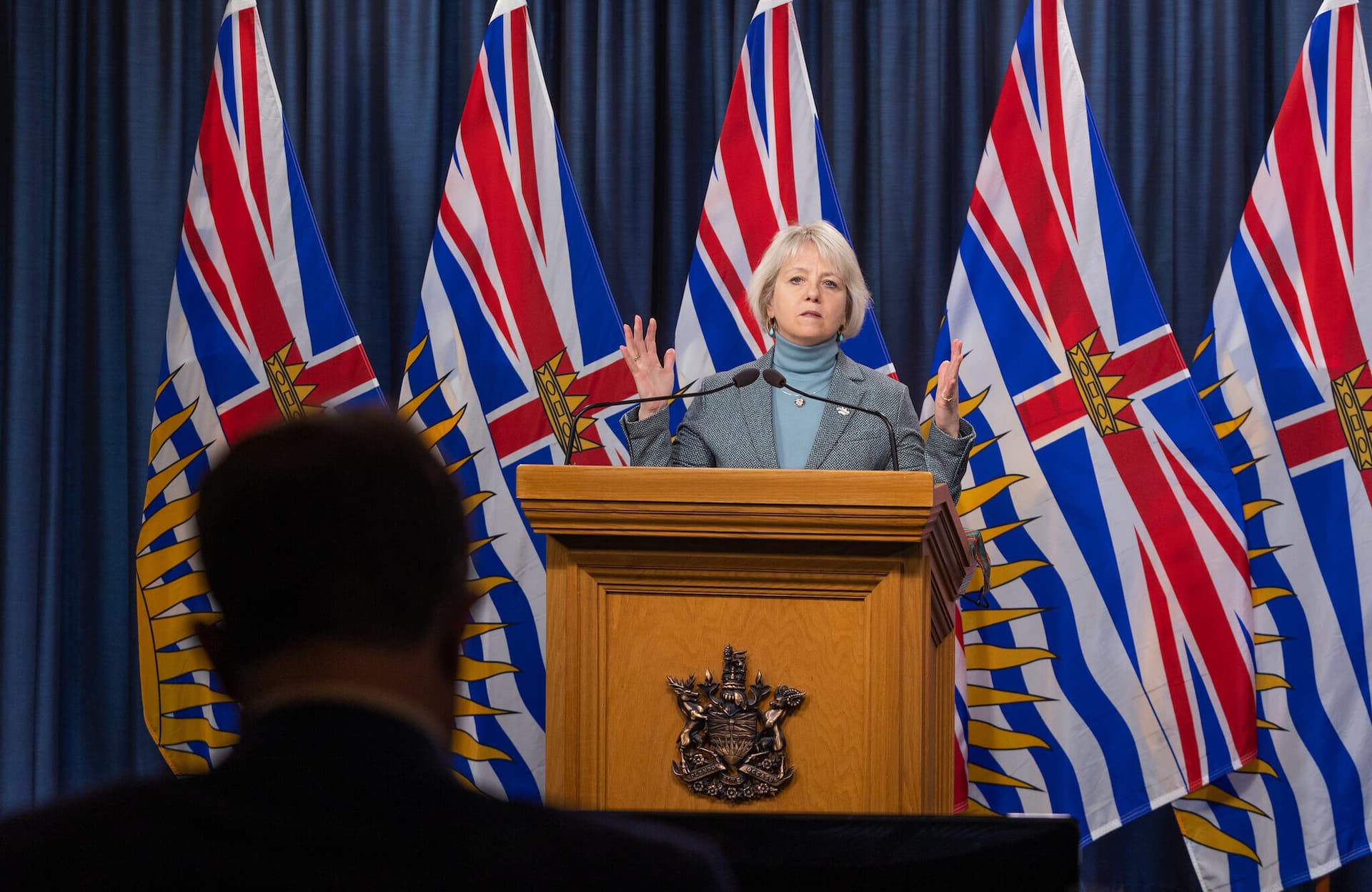
B.C.'s provincial health office, Dr. Bonnie Henry during a press conference in Victoria. (Photo - BC Govt.)

British Columbia's provincial health officer says she's optimistic the province is moving to a "better place" that could see more COVID-19 restrictions lifted by mid-March, before spring break.

Dr. Bonnie Henry said Tuesday that a decline in hospitalizations, immunity from vaccination and the availability of at-home rapid tests point the way forward to normal activities like high school graduations, which youth in particular need to feel connected to others.

However, she said not everyone will be ready or able to leave behind some pandemic measures like masks and physical distancing so it's important for people to be respectful of those who are immunocompromised or elderly because they're still at risk of infection.

"These are not tools that we abandoned. They are things that helped us, that worked. They're part of the strategies that we've had. Before vaccination, they were the only strategies that we had. Now, we have that level of immunity. But that's going to change and wane over time."

Businesses and workplaces will have to take responsibility for requiring some measures like vaccine passports, depending on the level of risk, and it's important to move slowly through a time of transition, Henry said.

There are still some uncertainties about new variants, including BA. 2, with some cases present in B.C., though no cases of BA. 3 and Delta Omicron have been detected in the province, she said.

Updates on COVID-19 will soon be provided weekly as B.C. ensures it's prepared for a potential uptick in COVID-19 cases during the next respiratory season.

"We know there will be respiratory virus resurgence. And we've seen there's a pattern to COVID as well so we may need these additional layers of protection again as we move into next fall," she said.

The province will integrate wastewater surveillance testing for COVID-19 into its regular surveillance of respiratory illness including influenza and also include other pathogens in an effort to get a periodic snapshot of what else may be circulating in communities, Henry said.

Unlike in much of the country, vaccine passports are still needed in B.C. to attend indoor events, though Henry has said that measure may also be reconsidered before its current expiry at the end of June.

Overall, the province is moving into a phase that will have people making individual choices to protect themselves from infection, she said.

"We are in a transition phase. We do not know enough about this virus from an epidemiologic point of view for us to consider it endemic. That presupposes that we know the pattern that we're going to see through respiratory season," she said.

"We have a pretty good idea now. But there's still a lot of this virus circulating around the globe. There are inevitably going to be changes and surprises that we will need to adapt to."

Health Minister Adrian Dix said that despite lower numbers of people in hospital, the health-care system faces workforce challenges, which the province is trying to address.

Last month, he announced B.C. will add 602 nursing seats to public post-secondary institutions. That number will add to about 2,000 existing seats, mostly in programs training registered nurses, but also in those for future psychiatric and practical nurses.

B.C. reported Tuesday that 523 people were in hospital, with 83 of them in intensive care. Dix said that's about half the number of hospitalizations at the peak of the Omicron wave.

The province also said 466 new cases of COVID-19 had been diagnosed.
Latest news

lorne-doerkson-pleased-with-carney-governments-budget-hopes-b-c-will-receive-major-funding
CanadaNov 06, 2026

Lorne Doerkson Pleased with Carney Government’s Budget, Hopes B.C. Will Receive Major Funding

B.C. Premier-designate Lorne Doerkson has voiced support for the federal budget presented by Prime Minister Mark Carney’s Liberal government, calling it encouraging for Canada’s economic future. The budget includes $6.5 billion in funding to support the forestry industry, which has been hit hard by U.S. tariffs. Doerkson expressed hope that British Columbia would receive a significant share of the funding, noting that the forestry sector is a major pillar of the province’s economy. Former B.C. Forests Minister Ravi Parmar also welcomed the funding, describing it as a good start. He said
canadas-unemployment-rate-rises-to-6-7-highest-level-in-six-months
CanadaNov 06, 2026

Canada’s Unemployment Rate Rises to 6.7%, Highest Level in Six Months

Canada’s unemployment rate climbed to 6.7 per cent in October, reaching its highest level in six months, according to the latest data released by Statistics Canada on Friday. Economists had expected the economy to add 13,600 jobs overall. However, instead of gaining jobs, Canada recorded a net loss of 4,700 positions last month. The decline was primarily driven by the private sector, which shed 53,000 jobs, marking its first major drop since February. Meanwhile, public-sector employment increased by 50,000 positions, while the construction industry added 16,000 jobs, helping offset some of t
AlbertaNov 06, 2026

Alberta Referendum Cost Nearly $84 Million, Elections Alberta Seeks Additional $59 Million

Elections Alberta has estimated the total cost of last month's referendum at nearly $84 million. The agency has requested more than $59 million in additional funding from the provincial government to cover expenses already incurred and upcoming work. Of the requested amount, approximately $49 million is intended to cover costs related to the October referendum, which have already been incurred. The vote set new records for advance voting, special ballots and voter turnout. Chief Electoral Officer Gordon McClure told a committee that manually counting 10 ballot papers for each voter placed sign
canada-raises-deposit-insurance-limit-from-100-000-to-250-000
CanadaNov 06, 2026

Canada Raises Deposit Insurance Limit from $100,000 to $250,000

The federal government led by Prime Minister Mark Carney has announced an increase in the deposit insurance limit, raising the amount of money protected in Canadians’ bank accounts from $100,000 to $250,000. Under a new proposal introduced as part of Budget 2026, the Canada Deposit Insurance Corporation (CDIC) coverage limit will increase by $150,000. This marks the first increase in the deposit insurance limit in nearly 20 years. CDIC insurance guarantees that eligible deposits held at member financial institutions are protected up to a specified limit in the event of a bank failure. The co
poilievre-accuses-carney-government-of-misleading-canadians-over-immigration-targets
CanadaNov 06, 2026

Poilievre Accuses Carney Government of Misleading Canadians Over Immigration Targets

Conservative Leader Pierre Poilievre has launched a sharp attack on Prime Minister Mark Carney over the federal government's new immigration plan, accusing the Liberals of manipulating figures to make it appear that immigration is under control. Poilievre alleged that the government is misleading Canadians, arguing that the new immigration targets remain among the highest in Canadian history. He said Carney is describing immigration levels as stable, but in reality, the government's mass immigration plan is protecting the profits of large corporations at the expense of Canadian families, inclu

Related News