23.12°C Vancouver

Feb 27, 2020 12:36 AM -

What if Canada gets an outbreak of the new coronavirus? A look at pandemic plans

Share On
what-if-canada-gets-an-outbreak-of-the-new-coronavirus-a-look-at-pandemic-plans
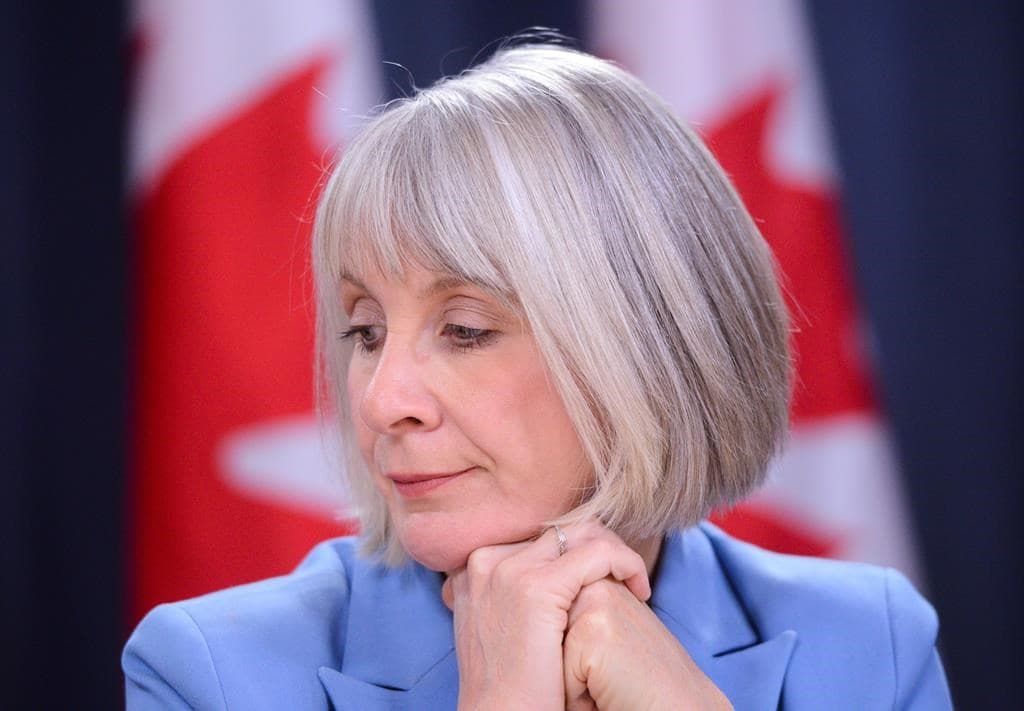
Patty Hajdu, Minister of Health, makes an announcement regarding a Bill entitled "An Act to amend the Criminal Code (medical assistance in dying)" during a press conference at the National Press Theatre in Ottawa on Monday Feb. 24, 2020. THE CANADIAN PRESS/Sean Kilpatrick

Canada has a leg up on preparing for a potential outbreak of the novel coronavirus because the country already has a detailed pandemic plan, according to federal Health Minister Patty Hajdu.

It includes lessons learned from the 2003 outbreak of SARS in Ontario and the 2009 H1N1 influenza pandemic. So what is supposed to happen if the virus starts spreading in Canada? Here's a simplified look:

Some steps in the plan are already underway, like stepping up surveillance of the disease in Canada and globally, and alerting the public to the potential outbreak. The government has also increased lab capacity to accommodate tests for the virus and put out guidelines for health providers and public-health advice. It has also begun funding rapid research into the virus.

A priority is to figure out how bad things are, and how bad they're likely to get based on how easily the illness spreads and how sick it makes people who catch it. H1N1 flu, for example, had moderate transmissibility and wasn't terribly severe, as influenza viruses go.

That put the impact on par with a bad flu season.

The 1918 "Spanish flu," on the other hand, made people very sick and was very easily transmitted. Unusually, it was exceptionally deadly to young adults, putting extreme pressure on a patchwork health system and killing an estimated 50,000 Canadians. Once everyone has a handle on those two factors, it becomes easier to predict what the impact is going to be on individual patients, the health system, society and the economy, which allows the federal and provincial governments to prepare.

So far the confirmed cases of the new coronavirus, or COVID-19, in Canada have been found in people who have recently travelled out of the country and their very close contacts. If the virus starts spreading locally, provinces and territories are expected to ramp up capacity to deal with an increase of cases.

If cases spread at the local level, governments might also consider things like school closures and gathering volunteers to open reception centres for people who are sick and need help but not necessarily hospitalization.

If things get worse, then it's time to triage. If the virus overtakes the capacity of provincial health-care systems, they are supposed to increase their surge capacity as much as possible. If that doesn't work, they have to decide who needs the services most. That's also when public-health agencies will consider cancelling major gatherings like festivals and sports events.

If a vaccine becomes available the pandemic plan says the provinces and the federal government should decide who is going to get it first, based on who's most at risk, and start immunizing people as quickly as possible.

The plan also outlines what happens when the pandemic dies down and things start to get back to normal. First is to prepare for a possible resurgence and restock supplies. Health systems should also put together immunization programs, if a vaccine exists, and evaluate the psychological effect of the outbreak on the public.

When it really is over, it's time to look back and evaluate how it went, so the plan can be updated for the next health crisis.



Latest news

mexico-rejects-claims-of-separate-u-s-trade-deal-reaffirms-support-for-cusma
BCJul 17, 2026

Mexico rejects claims of separate U.S. trade deal, reaffirms support for CUSMA

Mexico is not seeking a separate bilateral trade agreement with the United States that would exclude Canada, Mexican Foreign Affairs Secretary Roberto Velasco Álvarez said Friday, reaffirming his country's commitment to the trilateral Canada–United States–Mexico Agreement (CUSMA). Speaking alongside Canadian Foreign Affairs Minister Anita Anand at a joint news conference in Ottawa, Álvarez said Mexico remains committed to maintaining the existing three-country trade pact. He said ongoing bilateral meetings with the United States should not be interpreted as an effort to sideline Canada.
b-c-premier-david-eby-to-push-for-u-s-style-anti-racketeering-law-at-first-ministers-meetings
BCJul 17, 2026

B.C. Premier David Eby to push for U.S.-style anti-racketeering law at First Ministers' meetings

British Columbia Premier David Eby says he will urge Canada's premiers and Prime Minister Mark Carney to consider introducing federal anti-racketeering legislation similar to the United States' Racketeer Influenced and Corrupt Organizations (RICO) Act in an effort to combat extortion and organized crime. According to Eby, he plans to raise the proposal during next week's Council of the Federation meeting and the First Ministers' Meeting. He said recent arrests in a U.S. law enforcement operation, in which charges were also laid against three British Columbia residents, highlight the need for s
ontario-cabinet-minister-stan-cho-resigns-after-controversy-over-toronto-hotel-expense-claims
BCJul 17, 2026

Ontario cabinet minister Stan Cho resigns after controversy over Toronto hotel expense claims

Ontario's Minister of Tourism, Culture and Gaming, Stan Cho, has resigned from cabinet after facing criticism over thousands of dollars in hotel expenses claimed while living in Toronto. According to reports, Cho claimed $16,203 in taxpayer-funded hotel accommodation expenses over the past three years, despite his home being only a few kilometres from Queen's Park. The expense claims were for stays at downtown Toronto hotels. In a statement, Cho described the claims as a "significant mistake" and confirmed he has repaid the full amount to the provincial government. The Ontario government has n
BCJul 17, 2026

Highway 1 through Fraser Canyon reopens with reduced speed limit as Brunswick Complex wildfire response continues

Highway 1 through British Columbia's Fraser Canyon has reopened to traffic, although wildfire crews continue efforts to contain the Brunswick Complex fires in the area. According to the B.C. Ministry of Transportation, the highway reopened Friday morning with single-lane alternating traffic in both directions. A reduced speed limit of 60 km/h remains in effect along a 27-kilometre section near Boston Bar to support emergency operations and improve safety. The Brunswick Complex wildfires have forced hundreds of residents in Boston Bar and nearby communities to leave their homes. Authorities hav
CanadaJul 17, 2026

Brampton man identified as homicide victim after body found in Stoney Creek

Hamilton Police have identified a man whose body was found in a Stoney Creek creek on Wednesday morning as 29-year-old Taranpreet Singh Sidhu of Brampton. Investigators have confirmed the case is being treated as a homicide. According to Hamilton Police, Sidhu's body was discovered in a creek near Fruitland Road North and Harbour Drive after a passerby spotted him partially submerged in the water on nearby rocks. Emergency responders attended the scene and confirmed he had died. Detective Sergeant Robert Delaney said Sidhu came to Canada from India in 2022 and had worked as a truck driver whil

Related News