19.77°C Vancouver

Apr 12, 2021 10:24 PM -

Throne speech outlines work to put pandemic behind us, plans for strong recovery

Share On
throne-speech-outlines-work-to-put-pandemic-behind-us-plans-for-strong-recovery
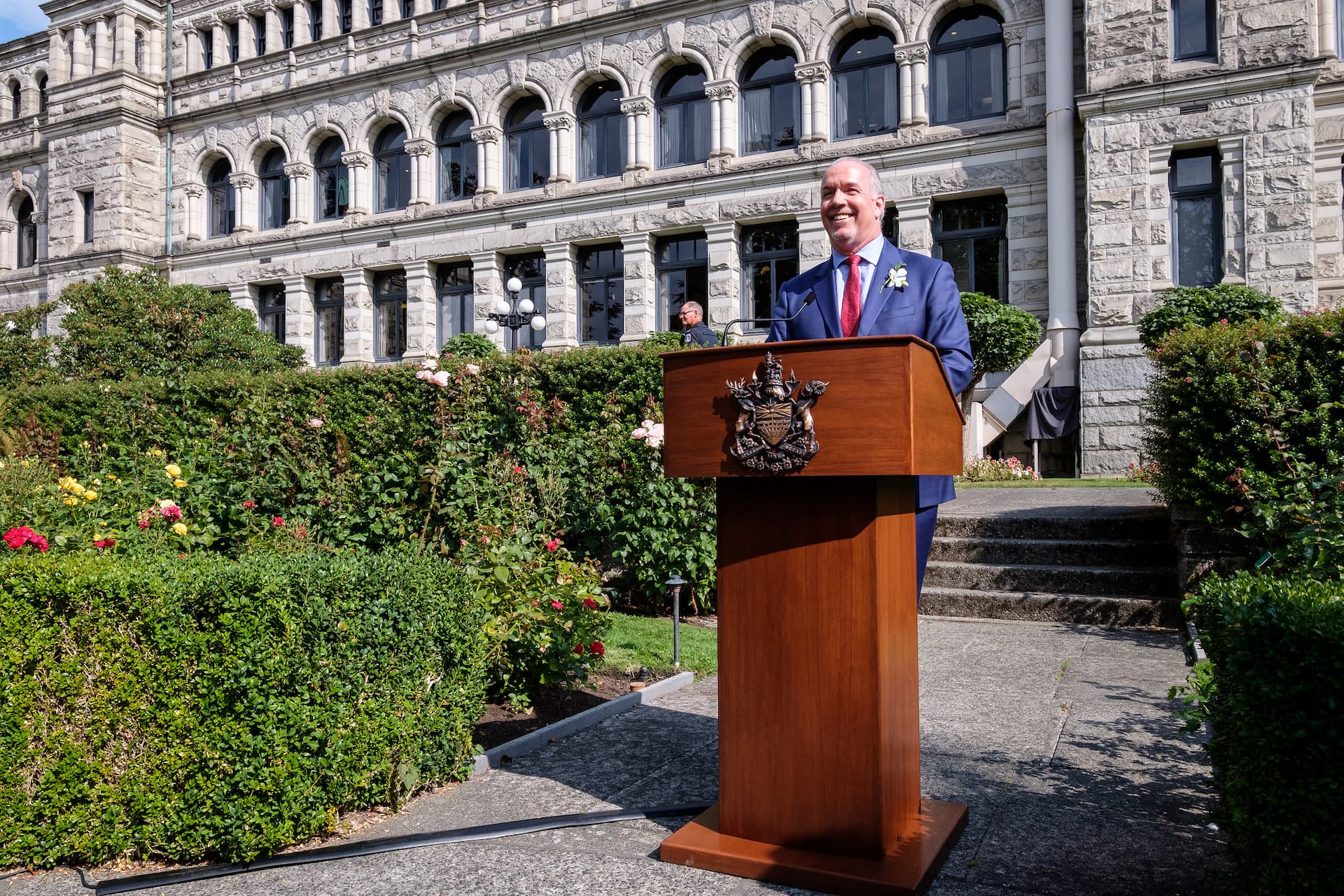
"We have come a long way by looking out for each other and we can finally see the finish line in sight," said Premier John Horgan. (Photo - B.C. Government)

Lt. Gov. Janet Austin has delivered the speech from the throne outlining government's commitment to supporting people, businesses and communities, while working to put the pandemic behind British Columbians and build a strong recovery for everyone.

"We have come a long way by looking out for each other and we can finally see the finish line in sight," said Premier John Horgan. "But in a marathon, the final push is the most difficult. The threat of new variants means we cannot let down our guard, not when we are this close to the end. Our top priority will continue to be on keeping British Columbians safe while we get more people vaccinated and plan for brighter days ahead."

The throne speech highlighted concrete actions government will take over the next year to ensure that B.C. comes back from the pandemic stronger and more resilient:

* improving health care so B.C. is better prepared for future challenges by addressing cracks in long-term care that COVID-19 has exposed, reducing surgery wait times and building more hospitals and urgent primary care centres in every part of British Columbia.

* making life more affordable through changes to ICBC that will cut car insurance rates by 20%, expanding access to $10-a-day child care spaces and investments to help get thousands of "missing middle" rental homes built throughout the province.

* supporting businesses with grants to help them build or expand online stores, and by introducing legislation to support the operations of InBC strategic investment fund, which will help promising B.C. firms scale up and keep jobs here at home.

* building more inclusive communities by developing B.C.'s first anti-racism law, reforming the outdated Police Act, and introducing landmark legislation to remove barriers to accessibility and inclusion experienced by British Columbians with disabilities.

* protecting the environment by reforming forestry legislation to meet the challenges of the 21st century, continuing to take action on recommendations to protect old growth stands, and improving waste management for plastics.

* bridging the digital divide by investing in boosting digital connectivity in rural, remote and Indigenous communities - building on the progress made to bring better internet to thousands of households around the province.

Latest news

AlbertaAug 19, 2026

Alberta AI Data Centres Face Public Scrutiny at Lacombe Town Hall

Alberta’s Minister of Technology and Innovation, Nate Glubish, is holding a town hall meeting in Lacombe this evening to hear residents’ views and concerns about artificial intelligence (AI) data centres. Plans to establish large-scale data centres in the area have faced opposition from some local residents and environmental advocates. Critics are particularly concerned about the large amounts of water the facilities could consume, their potential impact on the environment, and the heavy electricity demand that could put additional pressure on Alberta’s power grid and potentially increas
b-c-governments-decision-to-shut-public-employee-directory-sparks-transparency-debate
BCAug 19, 2026

B.C. Government’s Decision to Shut Public Employee Directory Sparks Transparency Debate

The B.C. government’s decision under Premier David Eby to suddenly shut down its online directory of government employees to the general public has sparked a political controversy in the province. Opposition parties have accused the government of hiding information from the public and undermining transparency. The government, however, says the decision was made to protect employees’ safety, privacy and cybersecurity. Through the directory, members of the public could previously find out which employees worked in different government departments, their positions and how to contact them. Lan
poilievre-targets-liberal-government-over-catch-and-release-bail-system
CanadaAug 19, 2026

Poilievre Targets Liberal Government Over ‘Catch-and-Release’ Bail System

The issue of bail for serious offenders in Canada has once again come under the spotlight. Conservative Leader Pierre Poilievre has criticized the Liberal government, accusing it of allowing dangerous offenders to remain in the community because of what he calls weak bail laws. Poilievre pointed to a recent incident in Windsor, Ont., involving 22-year-old Qasim Sabi, who has been accused of sexually assaulting two young boys. Police say Sabi was already facing allegations in an earlier case and was out under court-ordered conditions when the latest incidents allegedly occurred. According to po
canadas-wildfire-season-could-rank-among-countrys-worst-on-record
CanadaAug 19, 2026

Canada’s wildfire season could rank among country’s worst on record

Canada’s 2026 wildfire season is on track to become the country’s fourth-worst on record, with millions of hectares already affected and hundreds of fires still active. Federal Emergency Management Minister Eleanor Olszewski said during a virtual briefing Tuesday evening that the country remains in the middle of the wildfire season, with some regions facing difficult and uncertain conditions. According to the federal government, about 4.1 million hectares have been affected by wildfires so far this season. Roughly 580 fires are currently active across Canada, including about 30 that remain
b-c-conservative-leader-attacks-eby-government-over-forestry-decline
BCAug 18, 2026

B.C. Conservative Leader Attacks Eby Government Over Forestry Decline

B.C. Conservative Party Leader John Rustad has accused Premier David Eby of blaming U.S. President Donald Trump’s tariffs for the province’s forestry-sector decline in an attempt to hide his government’s own failures. In a statement Tuesday, Rustad said U.S. tariffs are harmful and should be strongly opposed. However, he said forestry production in B.C.’s Interior began declining as early as 2016, long before Trump returned to office, and has now fallen by about 50 per cent. According to Rustad, poor provincial policies, permit processes that can take two to three years, and uncertaint

Related News